
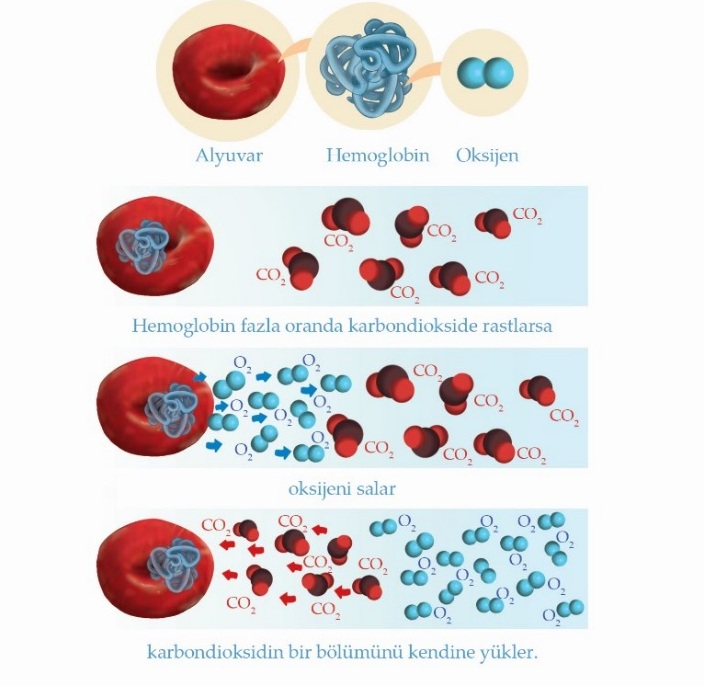
The Bohr effect is a fundamental physiological law that explains the delicate relationship between the amount of carbon dioxide (CO₂) in our blood and the release of oxygen (O₂) to our cells. According to this effect, when CO₂ levels rise, hemoglobin releases oxygen more easily; when CO₂ levels fall, oxygen has a harder time reaching the tissues. Nasal breathing supports this mechanism by helping CO₂ stay within its natural range, while mouth breathing lowers CO₂ too quickly and makes it harder for oxygen to move into the cells.
This means nasal breathing is not just a “healthier way” to breathe, but also a scientific tool that improves how efficiently we use oxygen. In daily wellbeing routines, breathing techniques and mindful living practices, nasal breathing is recommended as the primary option because it regulates the nervous system, optimizes gas exchange, supports brain function and facilitates energy production at the cellular level.
Bohr Effect and Nasal Breathing
Nasal breathing regulates the Bohr effect and carbon dioxide balance, helping to optimize the delivery of oxygen to the cells. Mouth breathing, on the other hand, can disrupt this balance and create a state of “silent oxygen hunger”.

Problem
Today, many people breathe through the mouth without even realizing it. This quickly lowers CO₂ and can make it harder for oxygen to be delivered to the cells. As a result, brain fog, easy fatigue, increased anxiety and sleep disturbances may appear. So it is not only the question “How much oxygen do I inhale?” that matters; the equally important question is “How efficiently does that oxygen reach my cells?”.
Solution
Nasal breathing supports the CO₂ balance required for the Bohr effect to function optimally. When you breathe through your nose and engage the diaphragm at a natural pace, CO₂ levels in the blood remain more stable and hemoglobin releases oxygen to the cells more efficiently. This mechanism has positive effects in many areas, from sports performance and stress management to mental clarity and sleep quality.
Scientific Evidence
- Christian Bohr (1914): Described how CO₂ levels directly influence hemoglobin’s affinity for oxygen and showed that higher CO₂ levels make oxygen release easier (Bohr effect).
- Harvard Pulmonary Research (2018): Reported that nasal breathing significantly increases nitric oxide (NO) production, and that this vasodilating molecule helps improve oxygenation.
- Journal of Applied Physiology (2020): Demonstrated that individuals with higher CO₂ tolerance exhibit better physical performance compared to those with low CO₂ tolerance.
- Stanford Stress Research Center (2022): Found that nasal breathing increases vagal tone, improves heart rate variability (HRV) and supports nervous system regulation.
What is the Bohr effect?
The Bohr effect is a key physiological mechanism that explains how changes in carbon dioxide levels and blood pH influence hemoglobin’s behavior in holding or releasing oxygen.
In short:
- When CO₂ increases and pH drops, hemoglobin becomes more willing to release oxygen.
- When CO₂ decreases and pH rises, hemoglobin becomes reluctant to let go of oxygen.
So “taking in a lot of oxygen” is not enough by itself; what really matters is how effectively that oxygen is used at the cellular level. The Bohr effect is at the heart of this process of cellular oxygenation.
How does nasal breathing support this mechanism?
Nasal breathing keeps the respiratory rate within a natural range and allows gas exchange to be regulated more evenly. The effects below all help the Bohr effect to work more efficiently:
- CO₂ balance is preserved: Slow breathing through the nose helps CO₂ remain at a natural level in the bloodstream.
- Nitric oxide production increases: NO produced in the nasal passages supports vasodilation and more efficient oxygen delivery.
- The diaphragm is engaged: Nasal breathing more effectively activates the diaphragm, which improves gas exchange in the lower regions of the lungs.
- The nervous system is regulated: Nasal breathing supports the parasympathetic system and creates a calming rhythm in the body.
How does mouth breathing disrupt the Bohr effect?
Breathing quickly and shallowly through the mouth lowers CO₂ faster than it should. At first this may feel like “I am taking in more oxygen”, but at the cellular level it can create a paradoxical oxygen deficit.
- CO₂ drops rapidly and hemoglobin becomes less willing to release oxygen.
- Heart rate increases and the nervous system shifts into an “alarm” mode.
- Sleep quality can decline and waking up unrefreshed becomes more common.
- Dry mouth, throat irritation and snoring may all increase.
Over time, this can create a picture of low-grade but chronic hyperventilation. From a wellbeing perspective, it is therefore important to organize the rhythm of daily life in a way that favors nasal breathing as much as possible.
Nasal vs mouth breathing in terms of the Bohr effect
| Feature | Nasal breathing | Mouth breathing |
|---|---|---|
| CO₂ balance | Preserved | Drops quickly |
| Oxygen delivery to cells | Increases | Decreases |
| Nitric oxide | High | Absent |
| Nervous system | Supports parasympathetic balance | Increases sympathetic activation |
| Sleep quality | Deeper and more restorative | Can be fragmented and shallow |
| Performance | More efficient oxygen use | Fatigue may appear more quickly |
Frequently asked questions
Why is the Bohr effect so dependent on CO₂?
When CO₂ levels rise, blood pH falls and hemoglobin releases oxygen more easily. This allows cells to receive more oxygen at times of need. When CO₂ drops too low, hemoglobin becomes reluctant to release oxygen and cellular oxygen hunger can appear even if we are breathing a lot of air.
Why is nasal breathing considered more effective?
Nasal breathing keeps CO₂ more stable, increases nitric oxide production, engages the diaphragm and creates a rhythm that calms the nervous system. Because it supports the Bohr effect under ideal conditions, it is considered more effective for both physiological and mental performance.
How does mouth breathing negatively affect the Bohr effect?
Fast breathing through the mouth lowers CO₂ very quickly. Reduced CO₂ limits hemoglobin’s capacity to release oxygen, which in turn decreases oxygen use inside the cells. Over time, this may contribute to chronic fatigue, poor sleep and a persistent sense of stress or inner restlessness.
Can breathing practices increase CO₂ tolerance?
Yes. Slow, nasal and diaphragm-focused breathing practices can increase CO₂ tolerance and allow for more efficient gas exchange. This supports sports performance, everyday resilience and mental focus in a very practical way.
This article is based on Christian Bohr’s original hemoglobin–affinity studies, modern respiratory physiology literature, Harvard and Stanford research and wellbeing-oriented breathing therapy practices. The physiological, neurological and performance-related effects of nasal breathing are supported by current scientific evidence.